
Excessive Sweating (Hyperhidrosis): Sweaty Hands, Feet and Armpits
Hyperhidrosis means sweating much more than the body needs to stay cool. Most often it affects the hands, feet, armpits or face, starts in childhood or the teenage years, and runs in families. It affects a few people in every hundred, it is not caused by poor hygiene, and there are effective treatments.
What is hyperhidrosis?
Sweating keeps the body cool. In hyperhidrosis, the nerves that control the sweat glands are overactive, so certain areas sweat heavily even when you are not hot or exercising.
In primary hyperhidrosis, the most common form, the sweating affects particular areas such as the palms, soles, armpits or face, on both sides of the body. It is not caused by another illness. In secondary hyperhidrosis, the sweating is caused by a medical condition or a medicine, and it often affects the whole body.
Primary hyperhidrosis typically stops during sleep, which is one way doctors tell the two apart.
Sweaty hands, feet, armpits and face
Primary hyperhidrosis usually affects one or more of these areas, and many people have more than one. The armpits and hands are the areas most often affected.
The sweating can happen in cool weather and at rest, not just in Singapore’s heat or during exercise, and it often gets worse with stress.
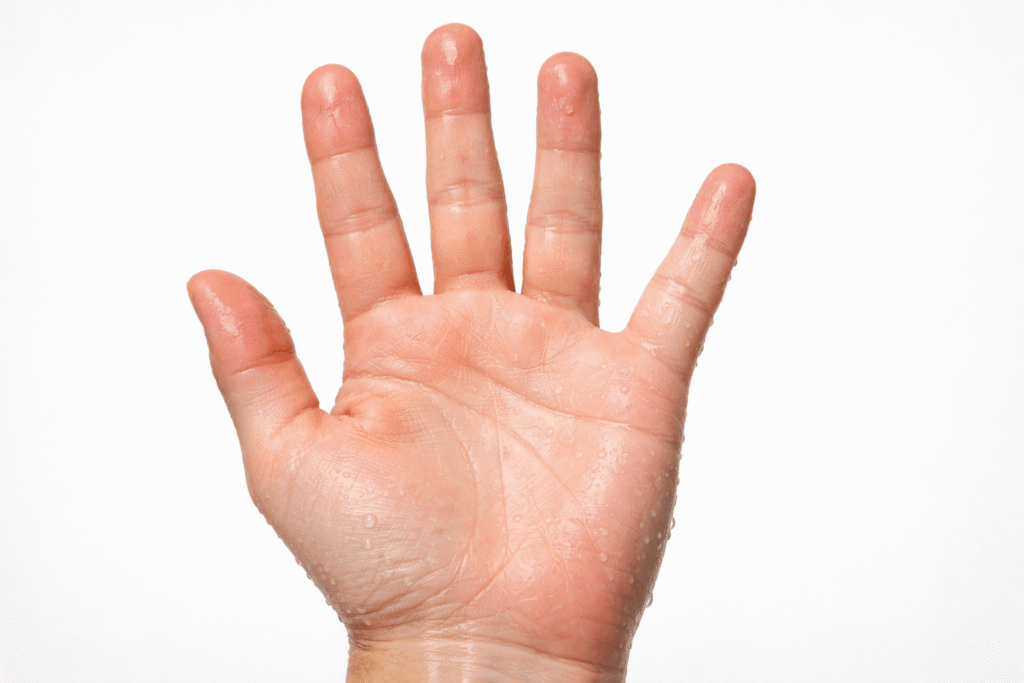
Sweaty hands (palmar)
Damp or dripping palms that make it hard to hold a pen, use a phone or shake hands. See sweaty palms treatment.
Sweaty feet (plantar)
Often happens together with sweaty hands. It can cause slipping in sandals, smelly feet and skin infections such as athlete’s foot.
Sweaty armpits (axillary)
Sweat patches that soak through clothes, well beyond normal sweating in the heat.
Face and scalp (craniofacial)
Sweat running down the face or through the hair, often worse with heat, spicy food or stress.
Primary or secondary hyperhidrosis?
Doctors look at the pattern of sweating to decide whether it is primary hyperhidrosis or a sign of something else:
| Primary hyperhidrosis | Secondary hyperhidrosis | |
|---|---|---|
| Where | Specific areas, such as the palms, soles, armpits or face | Often the whole body, or one side only |
| Both sides? | Yes, fairly symmetrical | Not necessarily |
| When it starts | Usually before the age of 25, often in childhood | Often in adulthood, sometimes suddenly |
| At night | Stops during sleep | May include heavy night sweats |
| Family history | Common | Not usually |
| Causes | Overactive nerves to the sweat glands | For example an overactive thyroid, diabetes or low blood sugar, menopause, infections, some medicines, and rarely cancers |
See a doctor promptly if you have
- Night sweats that soak your sheets
- Sweating with unexplained weight loss or fever
- Sweating all over that started recently, as an adult
- Sweating on one side of the body only
Sweating with chest pain, a racing heartbeat or breathlessness needs urgent care: call 995.
How hyperhidrosis is diagnosed
History and examination
Your doctor asks where and when you sweat, when it started and whether it runs in your family, and checks for signs of other conditions.
Severity score
The Hyperhidrosis Disease Severity Scale measures how much the sweating affects your daily life, from 1 (never noticeable) to 4 (intolerable).
Tests if needed
Blood tests, for example of thyroid function and blood sugar, if secondary hyperhidrosis is suspected. A starch-iodine test can map the sweating areas.
How excessive sweating is treated
Treatment depends on where you sweat and how severe it is. For secondary hyperhidrosis, treating the cause comes first.
Hands
Prescription antiperspirants, iontophoresis, botulinum toxin injections and tablets, with ETS surgery for severe cases. See all sweaty palms treatments.
Feet
Prescription antiperspirants and iontophoresis, plus breathable shoes, moisture-wicking socks and foot powder. Surgery is not recommended for sweaty feet alone.
Armpits and face
Prescription antiperspirants, botulinum toxin injections, tablets, and device-based treatments offered by some clinics.
Wondering whether it will improve by itself? Read can sweaty palms go away on their own and when to see a professional.
Frequently asked questions
Common questions about excessive sweating.
Is hyperhidrosis genetic?
Primary hyperhidrosis often runs in families, and many people with it have a parent or sibling who sweats heavily too.
Is excessive sweating caused by anxiety?
Stress and nerves can trigger sweating, but primary hyperhidrosis is not an anxiety disorder: people with it sweat heavily even when calm. Living with heavy sweating can itself cause worry and embarrassment.
Can children have hyperhidrosis?
Yes. Primary hyperhidrosis often starts in childhood or the teenage years. Non-surgical treatments are usually tried first.
Does drinking less water reduce sweating?
No. Cutting down on fluids does not treat hyperhidrosis and can make you dehydrated, especially in Singapore’s heat.
Which doctor should I see for excessive sweating?
Your GP or a dermatologist can assess you and start treatment. For severe sweaty palms that other treatments have not helped, a surgeon such as Dr Kan Yuk Man can advise on ETS surgery.

Excessive sweating getting in the way?
Dr Kan Yuk Man can assess your sweating, check for other causes, and explain the treatment options.
Disclaimer: This article is for general information only and is not a substitute for medical advice. Please consult a qualified doctor for advice specific to your situation.
Clinical guidance based on the diagnostic criteria for primary focal hyperhidrosis (Hornberger et al., 2004) and the Hyperhidrosis Disease Severity Scale.