
Sweaty Palms Surgery (ETS Sympathectomy) in Singapore
Endoscopic thoracic sympathectomy (ETS) is keyhole surgery that interrupts the nerve chain that switches on sweating in the hands. It stops or greatly reduces palm sweating in most people, and the effect is long-lasting. Most people also sweat more elsewhere afterwards (compensatory sweating), so it is reserved for severe sweaty palms after other treatments.
What is endoscopic thoracic sympathectomy?
The sympathetic nerve chain is a string of nerves running down each side of the spine, inside the chest. Signals that tell the sweat glands in the hands to work pass through it in the upper chest.
In ETS, the surgeon passes a thin camera and instruments into the chest through one or two small cuts under each armpit, and interrupts the chain by cutting, clipping or sealing it with heat. For sweaty palms this is usually done over the 3rd or 4th rib, on both sides in the same operation. Higher levels are now generally avoided because they cause more side effects.
It is also called video-assisted thoracoscopic sympathectomy.
Who is ETS surgery suitable for?
Usually suitable
- Severe sweaty palms that interfere with daily life (a severity score of 3 or 4)
- Sweating that started when young
- Antiperspirants, iontophoresis, injections or tablets have not controlled it
Less suitable
- Sweating mainly of the feet or armpits, or all over the body
- Sweating caused by another condition
- Previous chest surgery or lung disease
- A higher body weight, which is linked with more compensatory sweating
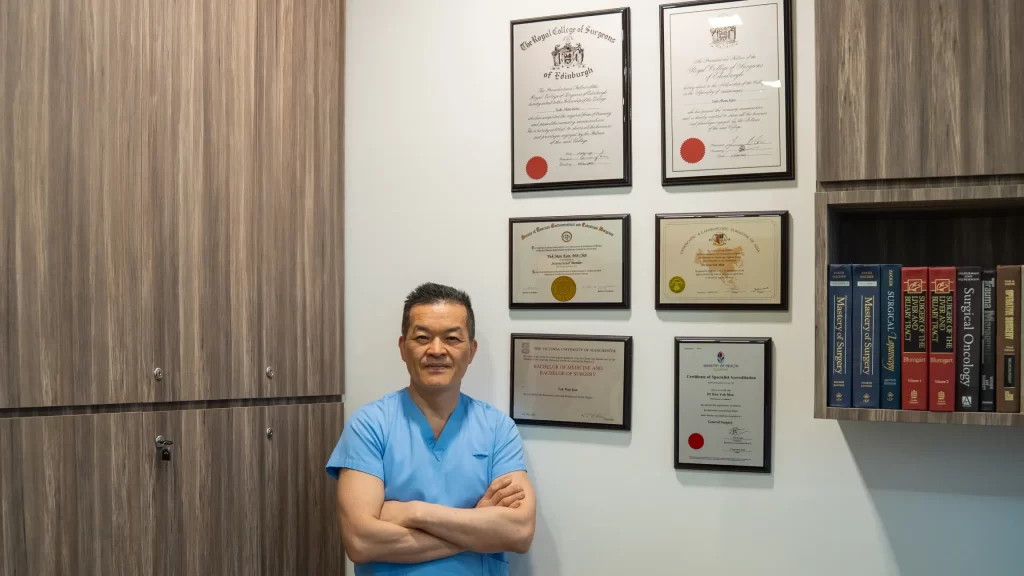
Before deciding, it is worth trying the non-surgical treatments. Dr Kan Yuk Man will assess your sweating and talk through whether surgery is likely to help you.
On the day of surgery
Before
You will be assessed, and a chest X-ray may be arranged. You will be asked not to eat or drink for some hours beforehand.
The operation
Done under general anaesthesia. The lung on each side is briefly let down so the nerve chain can be seen, then re-expanded. Both sides often take under an hour.
Going home
Often the same day or the next day. Mild chest or shoulder discomfort is common and settles with simple painkillers.
What results can I expect?
Most people notice warm, dry hands as soon as they wake up, and the effect on hand sweating is long-lasting. Many people report a big improvement in their daily and working life.
Some find their hands become too dry and need a moisturiser. Sweating of the armpits and feet may also improve, but this is less predictable.
Recovery
- Light activities and desk work within a few days for many people
- Avoid heavy lifting and strenuous exercise for about two weeks
- The small cuts under the armpits heal with scars that are usually hard to see
- A follow-up review with Dr Kan after surgery
Risks and side effects of ETS
Compensatory sweating
Most people sweat more on other parts of the body after ETS, usually the back, chest, abdomen or thighs. For most it is mild, but for a small number it is severe and affects daily life. It is hard to predict who will be affected and it cannot reliably be reversed, so this is the most important thing to weigh up before surgery.
Air or blood around the lung
A small amount of air left in the chest is common and usually clears by itself. Occasionally a drain is needed. Bleeding is rare.
Horner’s syndrome
Rarely, a drooping eyelid and a smaller pupil on one side, from irritation of nerves higher up the chain.
Other effects
Sweating on the face when eating (gustatory sweating), hands that are too dry, and, uncommonly, sweating returning in the hands over time.
Sweaty palms surgery cost in Singapore
The Ministry of Health fee benchmarks for the surgeon’s fee for sympathectomy in private hospitals, including GST:
MediSave and Integrated Shield Plans can be used where applicable, and Dr Kan is on several Shield plan specialist panels. Actual fees depend on the hospital and length of stay.
Source: MOH fee benchmarks for surgical procedures.
Frequently asked questions
Common questions about ETS surgery for sweaty palms.
Is ETS surgery permanent?
The effect on hand sweating is long-lasting for most people. A small number find that some sweating returns over time.
How common is compensatory sweating after ETS?
Very common: most people notice more sweating elsewhere, usually on the back, chest, abdomen or thighs. For most it is mild and acceptable, but for a small number it is severe. It is hard to predict who will be affected, and it cannot reliably be reversed.
Will ETS stop my feet sweating too?
Some people find their feet sweat less after ETS, but this is unpredictable. ETS is not recommended for sweaty feet alone.
How long does recovery take?
Many people go home the same day or the next day and return to light activities and desk work within a few days. Heavy lifting and strenuous exercise are usually avoided for about two weeks.
Will there be scars?
The cuts are small and placed under the armpits, so the scars are usually hard to see.
Can I use MediSave for ETS?
Yes, eligible procedures can be partially covered by MediSave and Integrated Shield Plans, subject to policy terms.

Considering surgery for sweaty palms?
Dr Kan Yuk Man performs ETS and will talk you through the benefits and risks, including compensatory sweating, before you decide.
Disclaimer: This article is for general information only and is not a substitute for medical advice. Please consult a qualified doctor for advice specific to your situation.
Clinical guidance based on the Society of Thoracic Surgeons expert consensus on the surgical treatment of hyperhidrosis (2011).