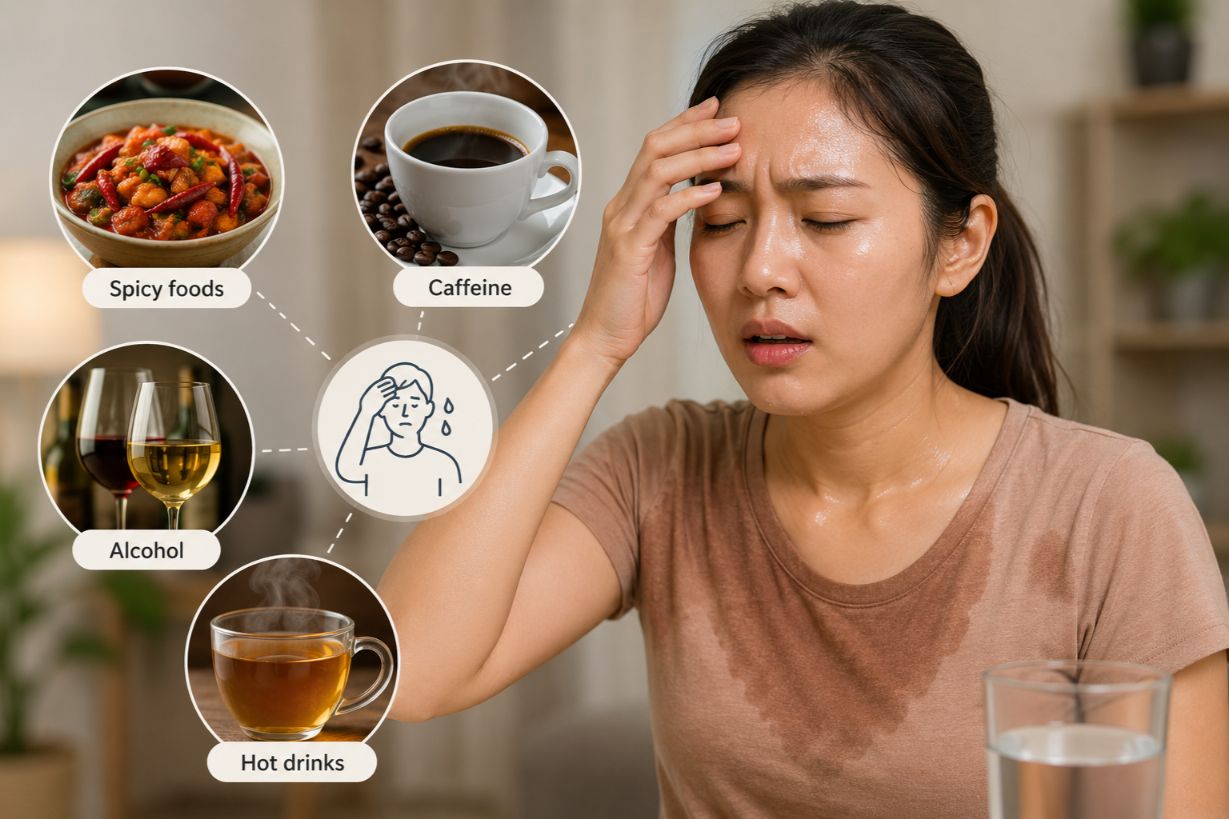
Yes, certain foods that trigger sweating are a common everyday experience, and caffeine can have a similar effect for some people. Spicy dishes, hot drinks, alcohol and caffeinated beverages are among the more frequently reported triggers. For most people this reaction is temporary and settles once the meal or drink is finished.
Understanding the foods that trigger sweating can help you notice patterns in your own body. However, if sweating feels excessive, unpredictable or unrelated to what you eat and drink, it may be worth speaking with a doctor in Singapore, as ongoing excessive sweating can have other causes such as hyperhidrosis.
Quick answer
- Spicy foods, caffeine, alcohol and very hot drinks can trigger sweating in some people.
- This type of sweating is usually temporary and linked to a specific meal or drink.
- Diet is one factor among many; genetics, stress and medical conditions also play a role.
- Persistent or excessive sweating that affects daily life may be hyperhidrosis.
- A doctor can assess your symptoms and discuss suitable options.
Which foods and drinks are common triggers
Several foods and drinks are known to prompt a sweating response. This often happens because they raise body temperature, stimulate the nervous system, or activate receptors linked to heat. The effect varies from person to person, so a trigger for one individual may not affect another.
Commonly reported triggers include:
- Spicy foods containing chilli (capsaicin), which can create a heat sensation .
- Caffeine in coffee, tea and some soft drinks.
- Alcohol, which can widen blood vessels and raise skin temperature.
- Very hot foods and drinks, such as soups and hot beverages.
- Large, heavy meals, which increase metabolic activity.
In Singapore’s warm and humid climate, these dietary triggers can feel more noticeable, as the surrounding heat already encourages the body to sweat to cool down.
Why caffeine can play a role
Caffeine is a stimulant, and for some people it can activate the part of the nervous system involved in the body’s alertness response. This may lead to a temporary rise in heart rate and, in some individuals, increased perspiration. People who are more sensitive to caffeine may notice this more than others.
The response can depend on:
- The amount of caffeine consumed
- Individual sensitivity and tolerance
- Whether caffeine is combined with heat, stress or physical activity
- The time of day and overall intake
If you suspect caffeine is contributing to your sweating, reducing your intake for a period and observing any change can be a simple starting point. This is one of the lifestyle adjustments that may help, though it is not a treatment for an underlying condition.
Doctor’s Perspective: If your sweaty palms started suddenly or you’re experiencing other unusual symptoms, it’s worth having a conversation with your doctor. Sometimes excessive sweating is your body’s way of signaling that something else needs attention. A simple checkup can provide peace of mind.
How spicy food affects sweating
Spicy food is one of the more well-known dietary causes of sweating. Chilli contains a compound called capsaicin, which stimulates the same nerve receptors that respond to heat. The body may then react as if it needs to cool down, leading to sweating on the face, scalp or elsewhere.
This response, sometimes called gustatory sweating, is usually harmless and passes quickly. However, if sweating after eating is frequent, one-sided, or seems out of proportion, it can occasionally point to another cause. A doctor can help distinguish an everyday reaction from something that needs further assessment. You can also read our overview of what is normal when it comes to sweaty palms.
Food triggers versus hyperhidrosis
It is helpful to separate ordinary, food-related sweating from hyperhidrosis, which is a medical condition involving excessive sweating. With dietary triggers, sweating is generally linked to a specific food or drink and settles afterwards. Hyperhidrosis tends to be more persistent and may occur without an obvious cause.
Signs that sweating may go beyond diet include:
- Sweating that occurs regularly, even without eating trigger foods
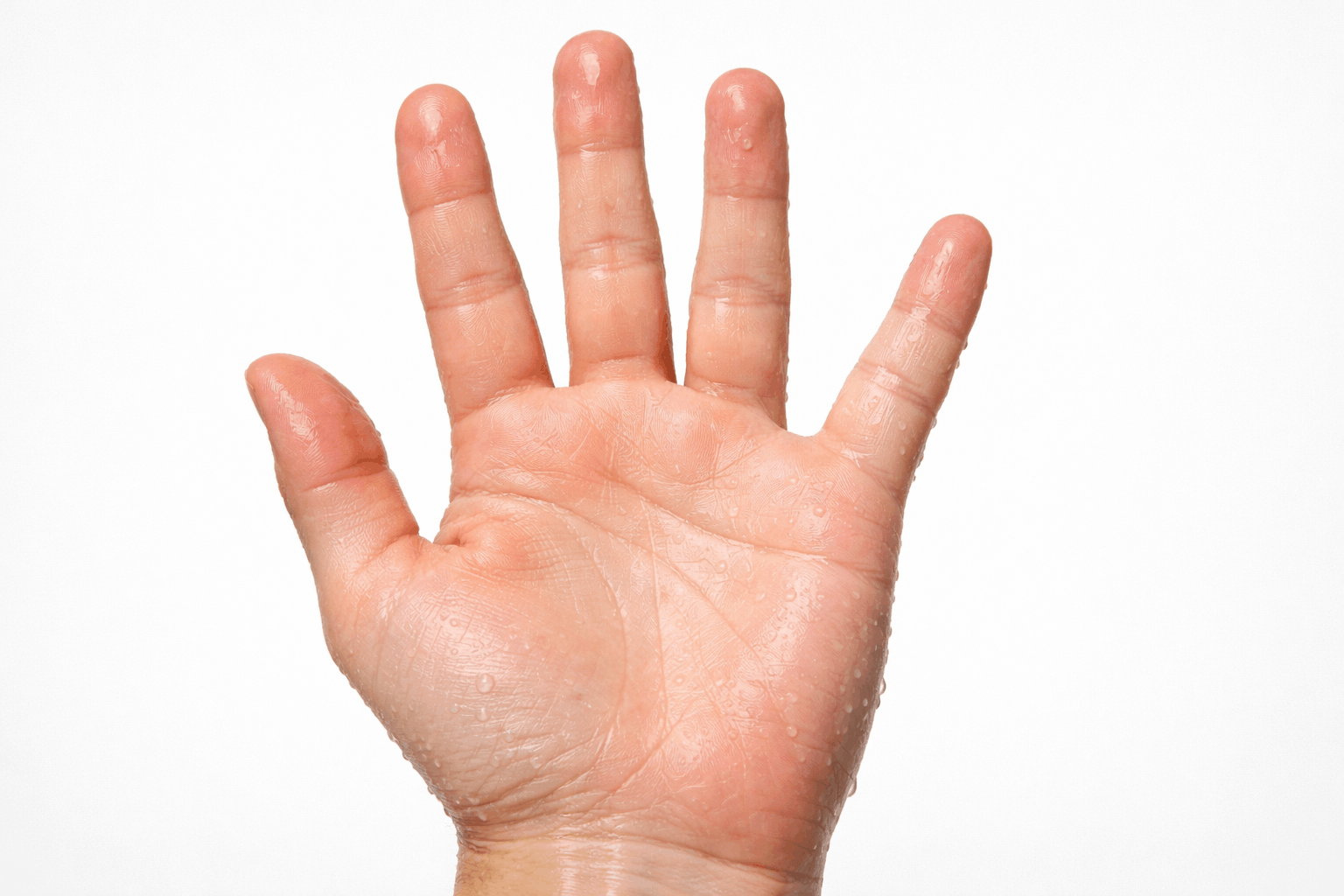
- Sweaty palms, feet or underarms that interfere with daily tasks
- Sweating that affects work, social situations or confidence
- Sweating that began in childhood or adolescence and has continued
Hyperhidrosis can be primary, where there is no underlying condition, or secondary to another medical issue. If this sounds familiar, our page on sweaty palms and their causes offers further background, and a doctor can provide a proper assessment.
When to see a doctor and what may help
Adjusting your diet may reduce sweating linked to specific triggers, but it will not address an underlying condition. If sweating is affecting your quality of life, seeing a doctor in Singapore is a sensible step. An assessment can help identify the cause and guide a suitable plan.
Practical measures some people find useful include:
- Noting which foods or drinks appear to trigger sweating
- Moderating caffeine, alcohol and very spicy meals
- Staying hydrated and dressing for the climate
- Managing stress, which can also contribute to sweating
A doctor may discuss options ranging from lifestyle changes to other approaches, depending on the cause and severity. You can learn more about assessment and the treatment options for sweaty palms and speak with a specialist about what is appropriate for you.
This article is for general information only and is not a substitute for medical advice. Please consult a qualified doctor in Singapore for advice specific to your situation.
Frequently Asked Questions
1. Is sweating without exercise normal?
Yes, it's completely normal. Your body sweats in response to stress, emotions, and nervous system activity, not just heat or physical activity. Some people simply have more active sweat glands than others.
2. Can anxiety cause sweaty palms even when I'm not anxious?
Yes. Your body can respond to subtle stress signals before you consciously feel anxious. What seems like random sweating often has an emotional trigger you haven't registered yet.
3. Will sweaty palms go away on their own?
It depends on the cause. Stress-related sweating may improve with lifestyle changes. but conditions like hyperhidrosis typically persist without treatment. If it's affecting your daily life, consult a healthcare professional about management options.
4. Are sweaty hands a sign of a serious health problem?
Usually not. Most cases are simply overactive sweat glands. However, if excessive sweating started suddenly or comes with other symptoms like weight changes, fatigue, or irregular heartbeat, see a doctor to rule out underlying conditions.
5. Do over-the-counter products work for sweaty palms?
Some clinical-strength antiperspirants can help when used consistently. Results vary by person. If over-the-counter options aren't effective, a doctor can discuss prescription treatments or other interventions.